Denver’s Chinatown
Full Article

Anti-Chinese Riot, 1880
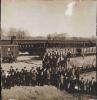
On Halloween in 1880, amid rising anti-Chinese sentiment in Colorado and across the West, a white mob ransacked Denver's Chinatown. In one of Colorado's worst episodes of racial violence, the mob beat one Chinese man to death, injured dozens more, and destroyed Chinese homes and businesses.
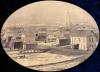
Denver’s Chinatown was a Chinese enclave neighborhood in Denver, Colorado, which existed by at least 1870 and endured until the 1940s. It was located in what is now the LoDo neighborhood, approximately between Market Street and Wazee Street. It was also referred to as “Hop Alley”, after a nineteenth century slang term for opium.
Chinese American immigrants established the neighborhood in the early 19th century after arriving in Colorado seeking work in the railroad, mining, and service industries. The enclave was a thriving community and home to many Chinese American-owned businesses, including laundries such as Sing Lee’s Laundry and restaurants such as the Lotus Room, Yuye Cafe, and Cathay Post #185. Throughout its existence, the neighborhood endured decades of racially motivated violence and other forms of abuse, including the violent Anti-Chinese Riot of 1880 which destroyed most of the original neighborhood and killed at least one resident. Following the riot, Denver’s Chinatown decreased in size but was rebuilt. A combination of ongoing, intense racial discrimination and economic factors led to most of the residents of Denver’s Chinatown leaving the area by the 1940s, and not longer after the city razed the district.
Origin & Location
The first Chinese immigrants arrived in the Colorado Territory in the 1860s. Most were single men who came to the United States for economic reasons, often with the goal of saving up money for a few years before returning to China. A large number came to the United States to work on the railroads or in the California gold rush, but following the completion of the transcontinental railroad and the depletion of many California gold mines many Chinese immigrants arrived in Colorado seeking steady work.
Despite overwhelming discrimination against Asian Americans by white settlers and racially-biased newspapers, the government of the Colorado Territory initially sought to attract Chinese immigrants to the region in order to provide a reliable and inexpensive workforce. On February 11, 1870, the Colorado Territorial Legislature adopted a joint resolution encouraging more Chinese to immigrate to the area, believing they would “hasten the development and early prosperity of the territory, by supplying the demands of cheap labor.” Except for the brief deluge of people during the 1858–59 Gold Rush, the territory suffered from chronic labor shortages, and hard physical work was necessary to make Colorado economically viable. The resolution guaranteed Chinese immigrants “security in their persons and property,” but the territorial (and later state) government did little to nothing to rein in prejudiced Euro-Americans who frequently persecuted Colorado’s Chinese American population over the following generations.
Chinese immigrants founded majority Chinese communities in and around many of Colorado’s mining towns, where they came seeking work on the railroads, in the mines, or in growing service industries needed by white miners. These communities often faced significant discrimination and outright attacks from other miners and settlers of European descent. As the mining boomtowns dwindled throughout the late nineteenth century, many of their inhabitants including Chinese Americans relocated to larger cities such as Denver.
As more Chinese immigrants arrived in Denver they developed Denver’s Chinatown as a neighborhood. In the 19th century ethnic enclaves were common, as they provided protection and support for minority groups in the often hostile Euro-American culture of the time.
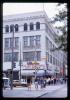
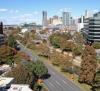
Denver’s Chinatown was located in what is now Lower Downtown (LoDo) near the city center. Its boundaries were not clearly defined, but at its apex it occupied the area along Wazee and Market streets, between Fifteenth and Twentieth streets. By the 1940s, the center of the community was found around Market street and Twentieth, near the current day site of Coors Field. It was adjacent to the city’s old red light district, and was near other ethnic enclaves, including an Italian neighborhood known as the Bottoms.
Culture & Economy
In the 1800s, most of Denver’s Chinatown residents were men from southern China. The majority spoke Cantonese and wore distinctive clothing such as black cotton shirts and wide-brimmed bamboo hats. Many also wore their hair in a long braided style known as a queue, which was considered a marker of Chinese citizenship and nationality both in China and in the West.
Few women initially lived in Denver’s Chinatown, which was typical of Chinese communities in the United states at the time. Federal laws restricted East Asian women from immigrating to the United States as part of an attempt to restrict the number of Asian Americans in the country. Almost all of the Chinese immigrants to the United States at the time were married, but most left their families behind in China and supported them by sending back money they earned in the United States. Occasionally, wives joined their husbands in the United States, but only after the men had established themselves and could support the family.
In 1880 only twenty-nine women lived in Chinatown, and there were only twenty-two in 1885. In 1882 the United States federal government passed the Chinese Exclusion Act, which prohibited all further immigration of Chinese nationals for ten years, further limiting the arrival of Chinese women. Meanwhile, anti-Chinese sentiment made intermarriage between Chinese people and white Coloradans a very rare occurrence. The gender imbalance prevented Chinese immigrants from establishing stable families and delayed new births in the community. The imbalance would begin to correct itself with the repeal of the Chinese Exclusion Act in 1943 and the influx of Chinese immigrants after the Immigration and Nationality Act of 1965. Colorado’s Chinese-American communities experienced gender imbalance until the 1990s.
Those who lived in Denver’s Chinatown worked to preserve their culture. They constructed temples and shrines for Buddhist, Taoist and Chinese folk religion observations, and openly celebrated Chinese holidays such as Lunar New Year. There were many restaurants in the neighborhood, which served traditional Chinese food alongside American dishes.
Chinese immigrants in early Denver had limited employment prospects. Along with other racial minorities they often were excluded from occupations that placed them in direct competition with Anglo-Americans. They often found work in labor-intensive fields, including on railroads and in the mining industry. Many others worked in the service industries that white workers avoided, especially as laundrymen. In the United States laundry was viewed as a low-status occupation, but it was a valuable and necessary service and many Chinese-owned laundromats became successful businesses. Until the turn of the century and the invention of steam laundries, hand-laundries owned and operated by Chinese Americans dominated the laundry industry in Denver.
The residents of many American Chinatowns formed mutual aid societies known as Tongs (from 堂, táng, meaning a meeting place or town hall) to help protect themselves and each other from the widespread discrimination they encountered in nearly every facet of society. These organizations arose from older sworn societies in China, which were often political groups. American Tongs were community organizations. Chinese American members would pay dues to the Tong and in turn would receive support in the form of housing assistance, employment opportunities, legal representation, and religious gatherings. Denver’s Chinatown was home to three prominent Tongs: the Bing Kong Tong, the Hop Sing Tong, and the Hip Sing Tong. The Hop Sing Tong is still in operation in Denver.
In other cities, especially San Francisco, Tongs garnered a reputation for criminal activity. Some Tongs were known to be affiliated with organized crime, and this spread as a stereotype applied to all Tongs by many white Americans, including the Tongs in Denver’s Chinatown. They were viewed chiefly as criminal organizations, which was reinforced by frequent discriminatory media coverage that emphasized the Tongs’ involvement in gambling, opium smoking, and sex work. However, none of these activities were illegal in Denver at the time, and while they were frowned upon by “polite society” they were also engaged in by Denver residents of all ethnicities and backgrounds.
Leadership among the residents of Denver’s Chinatown was often unofficial and decentralized. Chin Lin Sou was one of the most prominent residents of the neighborhood’s early history. He was one of the earliest Chinese immigrants to Colorado, arriving in the early 1870s. He gained a great deal of respect due to his honesty, entrepreneurial spirit, and his fluency in both Cantonese and English. For decades he served as an unofficial spokesman for the community and was sometimes called the “Mayor of Chinatown.”
“Hop Alley”
From the beginning Denver’s Anglo-American population viewed Chinese immigrants with suspicion but also a sort of fascination. Newspapers reported often on Denver’s Chinatown, but in an example of yellow journalism primarily focused on sensationalized articles and outright misinformation. The neighborhood became associated with various vices including illicit sex work, gambling, and opium smoking. This gave rise to a common nickname for the location among Anglo citizens: “Hop Alley”, which referred to “hop” or opium.
The vices most closely associated with the Chinese community were gambling, and opium. In the late 19th century Denver had seventeen opium dens, twelve of them in Chinatown. While many white citizens thought of Chinese Americans as “opium fiends”, the opium dens flourished in Chinatown because of the large number of white patrons. Before World War I, according to retired police captain Tom Russell, 60 percent of the dens’ customers were white addicts from uptown Denver. While opium smoking was socially frowned upon, there was no law against it until the Harrison Narcotics Tax Act of 1914.
Sensationalized journalism contributed to a number of urban legends about itself and the Chinese who lived there. It was rumored that tunnels and secret rooms accessible only by trapdoors connected the buildings. Gang activity was rumored as well, with some suspecting the Tongs—Chinese American community organizations—of organized crime or engaging in territorial wars with one another. While criminal Tongs and violent conflicts between them were known to exist in other cities, most famously San Francisco, Denver never experienced a “Tong war.”
Denver’s Chinese population became a scapegoat for many of Denver’s issues. White residents of the city stereotyped Chinese Americans as dangerous, and journalists and politicians used references to “heathen Chinee” and “Oriental hatchetmen” as an ethnic boogeyman.
Anti-Chinese Riot of 1880
On October 31, 1880, the white population of Denver rioted against an Anti-Chinese race riot broke out in Denver, targeting the inhabitants of Denver’s Chinatown. This riot led to the destruction of many Chinese-owned businesses and homes, and resulted in the death of at least one man.
In the 1870s and early 1880s, Chinatown was the most visible ethnic enclave in the city due to its centralized location. Because of that visibility, white Denverites easily singled out the Chinese for persecution, a phenomenon that resulted in Denver’s first recorded race riot. Though there were few Chinese people in Colorado, and their work was too specialized to constitute significant competition, many European immigrants and Anglo-Americans viewed them as an economic threat. Due in part to their perseverance against the discrimination they faced, Chinese immigrants garnered a reputation as “docile” laborers whose willingness to work for low pay would thwart early Labor Movement efforts to improve working conditions.
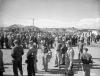
The 1880 Anti-Chinese Riot allegedly broke out as the result of an altercation in John Amussen’s saloon on Wazee Street. Two Chinese patrons were playing pool when a group of drunk white men began harassing them. The Chinese men left the saloon, but were followed and assaulted. Shortly afterwards, a mob numbering over three thousand marched on Chinatown. They raided homes, destroyed businesses, and attacked residents. The rioters reportedly chanted slogans such as “Stamp out the yellow plague” and other racially charged statements.
Rioters attacked twenty-eight-year-old immigrant Look Young, who had only lived in Denver for six months at the time. He was dragged out of his job at Sing Lee’s laundry, and the rioters beat him, cut off his braided queue, tortured him, and hanged him by the neck from a lamppost. Doctors attended to him, but he died of his injuries. Four white men were arrested and tried for his murder, but were found not guilty.
Hundreds of Denver’s Chinese population fled from the riots. Some received shelter from other residents of the city, including white brothel owner Lizzie Preston. Others were placed in the city’s jail by Denver’s small police force, apparently for their own safety.
No Chinese families or individuals ever received compensation for their financial losses or physical injuries. While some rioters were charged with crimes, it’s unknown if any served jail sentences.
The riot left Denver’s Chinatown in a state of near-ruin. The Rocky Mountain News reported that the neighborhood was “gutted as completely as if a cyclone had come in.”
In 2022, the city of Denver issued a formal apology for the Anti-Chinese Riot. City officials wrote, “While the city cannot ease past injustices against Chinese immigrants and the Asian American and Pacific Island communities, the city owes them a long-overdue apology. An admission of the wrongs committed and its failure to correct them is a first step towards recognizing and honoring their contributions, and can contribute to racial reconciliation. It will also serve to educate those who are ignorant of this shameful chapter in Colorado’s history and hopefully bring some closure to the families whose loved ones suffered racial violence and abuse.”
Decline
In spite of the violence, many residents of Denver’s Chinatown chose to return after the riot. The neighborhood continued to grow as more Chinese immigrants arrived in Colorado, and it reached its peak population of over 1,000 residents in 1890. However, the economic depression of the 1890s combined with ongoing and escalating discrimination, both from residents and from state and federal government, led many residents to leave. In addition, during the early 1900s the city’s government began to push Chinese Americans out of Denver’s Chinatown to make way for new developments. As the city’s central districts grew, many of Chinatown’s original buildings were demolished. By 1920, only 203 Chinese Americans lived in the entire city of Denver, and by 1940 this dropped to a historic low of 110.
In the 1930s and 1940s, Denver’s officials echoed earlier racist rhetoric to justify pushing out the city’s Chinese population. They claimed that the demolition of Chinatown would lead to social betterment by making way for modernized architecture, removing “dangerous” buildings, and discouraging a criminal element. Many of the remaining Chinese residents, displaced by the demolitions of the 1940s, relocated to other Denver neighborhoods including Five Points and Whittier.
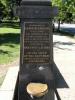
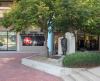
The area that once was Denver’s Chinatown is now part of Lower Downtown (LoDo). While there is no distinct Chinatown in Denver anymore, the city’s Asian American and Pacific Islander (AAPI) population continues to thrive around the city. Modern centers of Asian American communities include Sakura Square and the Far East Center. Today, the location of Denver’s Chinatown is honored by three historical markers which were installed by Colorado Asian Pacific United (CAPU), a non-profit organization for Asian American and Pacific Islander communities. CAPU has also worked with local artists to create two murals to celebrate Denver’s Asian history, located at 1890 Lawrence Street and along the 5280 Trail on the Auraria Campus.