Chin Lin Sou
Full Article
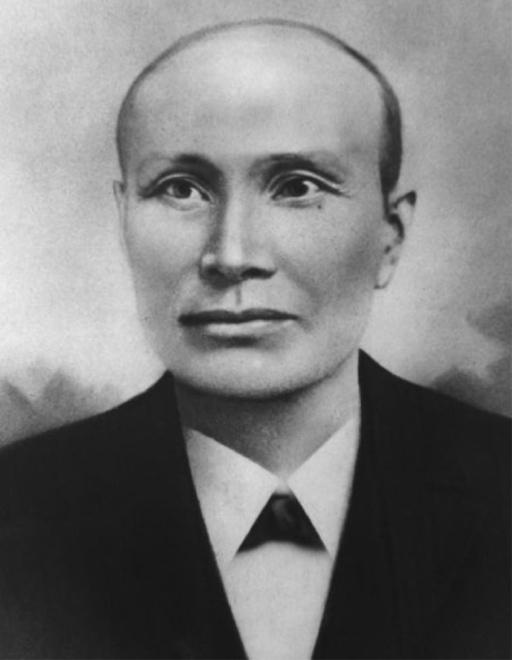
Chin Lin Sou
Arriving in Colorado in the early 1870s, Chin Lin Sou became a successful businessman.
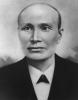
Chin Lin Sou (1836–1894) was a Chinese American business owner who immigrated to the United States in the 1850s, settling in Colorado by 1870. He defied racial barriers to establish himself as an esteemed business and civic leader in Colorado, and served as an informal representative for his fellow Chinese immigrants in Denver. He helped to defend Chinese workers from prejudice and to support Chinese-owned businesses, and contributed to establishing a positive legacy for Denver’s Chinese immigrant population. During his lifetime he was sometimes called the “mayor of Chinatown.”
Early Life
Chin Lin Sou was born in 1836 in southern China. Little is known about his early years except that he received an education (perhaps in preparation for the Confucian civil service exams) and learned to speak fluent English. He left Guangzhou (at the time also known as Canton) between 1855 and 1858, likely as one of many emigrants fleeing the Taiping Rebellion.
Chin arrived in San Francisco just as American railroad construction was gaining momentum. Railroad magnates throughout the 1850s and 1860s recruited Chinese immigrants to build their railways. The work included blasting mountainsides, clearing rubble, and erecting retention walls.
The railroad companies failed to formally record deaths, but engineering reports and newspaper articles suggest that hazardous work conditions from avalanches and mudslides, lack of safety regulations around explosives, and disease, killed hundreds of Chinese workers each year. The railroad paid these Chinese laborers less than their white counterparts, who received free food rations and worked fewer hours. The Central Pacific Railroad hired Chin to work as a foreman of Chinese laborers. This gave him more opportunities than most East Asian immigrants, many of whom lived in poverty and died in obscurity.
Career
After the Central Pacific joined the Union Pacific to complete the first transcontinental railroad in 1869, American railroad companies hired Chinese immigrants to build and maintain other lines. Chin found work with the Denver Pacific Railroad as a foreman overseeing Chinese crews building a feeder line connecting Denver to the Union Pacific at Cheyenne, Wyoming. Some Chinese immigrants migrated to the nation’s interior to find work in agriculture, logging, and mining.
Entrepreneurship in Colorado
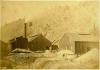
After leaving the railroad industry Chin remained in Colorado, where in 1870 he became a supervisor of Chinese laborers near the mining town of Black Hawk. As mining foreman, Chin hired workers, drafted contracts, purchased supplies, and negotiated wages.
Chin also started to deal in abandoned mining claims. Western territories forbade Chinese miners from filing original claims, forcing them to work mines that while-only operations had discarded. In turn, Chinese miners specialized in the less profitable form of placer mining, using water to collect surface-level gold in streambeds. Unlike other Chinese immigrants who turned to cooking and laundry when placer mining failed them, Chin made a small fortune by buying and selling abandoned mines. In 1874, the Colorado Springs Gazette deemed Chinese laborers "as a sort of necessary evil" to fulfill cheap labor demand. Chin's success as a mine manager and businessman challenged this stereotype.
Americans excluded Chinese immigrants from mainstream society because their language, religious practices, and physical appearance seemed too alien. In untruthful reporting that simply confirmed existing biases among white readers, journalists sensationalized Chinese immigrants as dangerous heathens who indulged in drugs, prostitution, and gambling. Denver’s Chinatown, located in Denver’s lower downtown, was referred to as “Hop Alley” by white residents, and it gained a reputation for opium and crime. Yet many non-Chinese residents of Denver viewed the neighborhood as a source of entertainment, with wealthy whites frequenting opium dens as the drug became increasingly fashionable.
Chin challenged typical Chinese stereotypes. He spoke fluent English, dressed in Western fashion, and obtained naturalized American citizenship. His integration into society was an anomaly. Newspapers frequently commended him for his intellect and entrepreneurial spirit while denigrating other Asian immigrants. In 1892, the Fairplay Flume referred to Chin as “one of the ‘whitest’ of his kind,” and two years later described him as “a more than usually intelligent Chinaman”—a term widely considered a slur today. These remarks indicate that many white Coloradans continued to view Chin as an outsider.
“Mayor of Chinatown”
Chin used his financial success to assist Colorado’s growing Chinese community. Between 1870 and his death in 1894, he supervised hundreds of Chinese placer miners near Black Hawk, Central City, Denver, and Fairplay. With his mining associate Edward L. Thayer, Chin also opened supply stores in Gilpin County. In Denver, he participated in the Chee Kong Tong, a Chinese fraternity dedicated to providing financial aid to Chinese-owned businesses and helping the Chinese community.
Chin’s success enabled him to act as an informal ambassador for the Chinese community as it confronted prejudice and discrimination. When early on the morning of May 21, 1874, a fire partially destroyed Central City, local authorities claimed without evidence that Chinese miners had started the fire during a religious ceremony. To quell growing anger, Chin defended the miners by claiming a defective flue had instead started the fire. Newspapers reported that people believed Chin’s account because of “his gentlemanly and dignified deportment” and “rare skill in conducting business affairs.” The fire’s true cause remains unknown.
Unlike many other Chinese immigrants, Chin earned enough money to pay for his wife’s passage from China, and the couple had six children in Colorado. In 1873 their first daughter, Lily, made news as Colorado’s first Chinese American child. Nicknamed the “Belle of Chinatown” by the press, Lily Chin grew into a fashionable socialite. Her extravagant 1894 wedding to businessman Look Wing Yuen shook Denver amid unsubstantiated, racist claims that Chin had sold his daughter to a much older man with two wives.
Legacy
Chin died of a long-term illness on August 10, 1894. He was originally buried at Riverside Cemetery until his family exhumed his body and returned it to China. Almost a century later in 1977, the Ethnic Minority Council of the Colorado Centennial-Bicentennial Commission cosponsored a stained-glass memorial at the State Capitol dedicated to minority leaders. While Chin is included in this memorial, he is depicted wearing a stereotypical red Chinese gown rather than the Western-style suit he was known for.
Five generations of Chin’s descendants have lived in Denver. Chin’s son, Willie Chin, ascended to his father’s position as unofficial “Mayor of Chinatown” after Chin’s death. Willie’s two sons, William and Edward, both served in the US Army Air Corps during World War II. Their sister, Wawa, graduated with a business degree from Colorado Women’s College.
Chinese American participation in the war, followed by immigration reform in the 1960s, fostered better relations between Chinese Americans and mainstream society. However, Chinese Americans still faced prejudice. In the 1940s, Denver’s Chinatown was purposefully demolished and the city’s East Asian immigrant populations intentionally scattered across the city to encourage assimilation into Anglo-American culture. One of Chin’s descendants, Carolyn Kuhn, recalled being told “you don’t belong here” as a child, even though she is a fourth-generation Denverite. Although Colorado’s history of racial discrimination has left behind a whitewashed version of history, the experiences of people like Chin show that the state’s past is far more diverse than many Coloradans know today.